
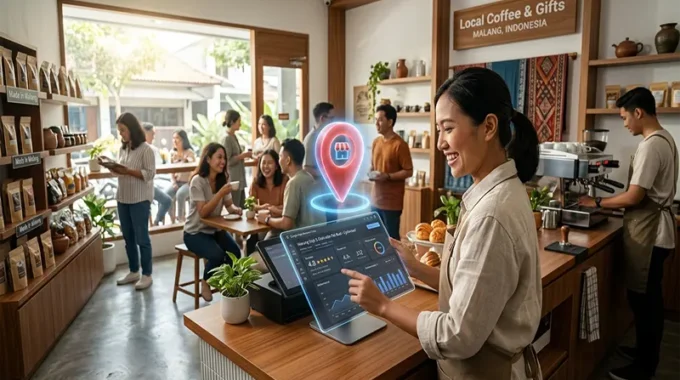
In 2026, your Google Business Profile (GBP) is no longer just a digital directory listing—it is your primary digital storefront. With the rise of AI-assisted search, Google’s algorithms prioritize businesses that provide a seamless, authoritative, and consistent experience across the entire web. Ranking in the coveted “Local Pack” (the top three map results) is the single most effective way to drive high-intent, local customers directly to your door.
This guide outlines how to transform your listing from a static placeholder into a high-performance lead generation engine.
The Foundation: NAP Consistency & Digital Syncing
Before focusing on “growth hacks,” you must master the technical basics. Google’s AI acts as a validator; if it detects conflicting information about your business, your “trust score” drops, and your rankings suffer.
- NAP Consistency: Ensure your Name, Address, and Phone number are identical on your website, your GBP, and every external citation (e.g., Yelp, industry directories).
- Cross-Platform Digital Syncing: In 2026, consistency goes beyond NAP. Your website’s “About” page, your social media bios, and your GBP description should tell a unified story. If your website claims you are a “premium” service provider but your social media and GBP describe you as “low-cost/budget,” the AI perceives this as a disconnect, negatively impacting your authority. Sync your hours, service menus, and location data across every digital asset you own.
Advanced Optimization Tactics
1. Proximity and Category Selection
Google’s algorithm relies on relevance and distance. While you cannot control your physical location, you can optimize for relevance:
- Primary & Secondary Categories: Select the most specific primary category (e.g., “Specialty Coffee Shop” rather than just “Restaurant”). Use all available secondary categories to capture nuanced search intents.
- Local Intent: Ensure your website includes landing pages for each neighborhood or service area you cover, which signals to Google that your business is locally relevant to those specific geographic queries.
2. Review Velocity and Sentiment
Reviews are no longer just social proof—they are a critical ranking signal.
- Review Velocity: Aim for a steady, organic stream of reviews rather than a one-time “burst.”
- The “Reply” Mandate: You must reply to every review—positive or negative. Use this as an opportunity to include natural, keyword-rich language. For example, if a customer praises your “fast plumbing repair,” your response should acknowledge the “fast plumbing repair services our team provides.”
3. The Power of “Living” Content
Google rewards active profiles.
- GBP Posts (Updates/Offers): Treat your GBP like a social media feed. Post weekly updates regarding current offers, events, or answers to common customer questions.
- Geo-Tagged Media: Regularly upload high-quality, authentic photos of your team, your storefront, and your finished projects. When possible, ensure these images are clear and correctly categorized within the GBP dashboard.
The Role of Geospatial Media & Citations
Google uses “Geospatial Media”—photos and videos—to verify that your business exists in the real world.
- Visual Trust: Profiles with regular photo updates earn significantly higher engagement (calls, direction requests) than stagnant ones.
- Local Links: One link from a local Chamber of Commerce or a neighborhood news site often outweighs dozens of generic directory links. Focus on building relationships with local entities to establish your “Local Authority.”
Monitoring and Analytics: Beyond Vanity Metrics
Stop obsessing over simple page views. In 2026, focus on Micro-Conversions:
- Direction Requests: A clear signal of intent to visit.
- Click-to-Call/Message: Demonstrates high-intent interest.
- Service Menu Views: Shows that the user is actively vetting your offerings.
Use the “Performance” dashboard to identify which search terms are actually driving these actions, and then double down on the content that attracts those specific users.