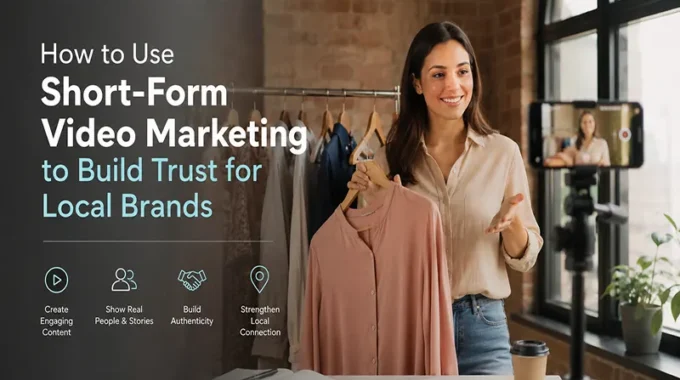
How to Use Short-Form Video Marketing to Build Trust for Local Brands

For local businesses, the biggest advantage you have over national chains isn’t your pricing or your scale—it’s your humanity. In a digital world saturated with polished, corporate advertisements, local brands have a unique opportunity to win by being real.

Short-form video—think Instagram Reels, TikTok, and YouTube Shorts—is the most effective medium for bridging the “Local Trust Gap.” It allows you to move beyond a static logo or a generic website and invite your community into your world. When done correctly, these videos don’t just reach viewers; they build the kind of deep, neighborhood-level trust that turns casual passersby into loyal advocates.

The Trust-Building Content Pillars

Trust is built through transparency and consistency. You don’t need a film crew; you just need to show your audience the heart behind your business.

1. Behind-the-Scenes Transparency

National brands are sterile. You are not. Use short-form video to show the “messy” reality of your …
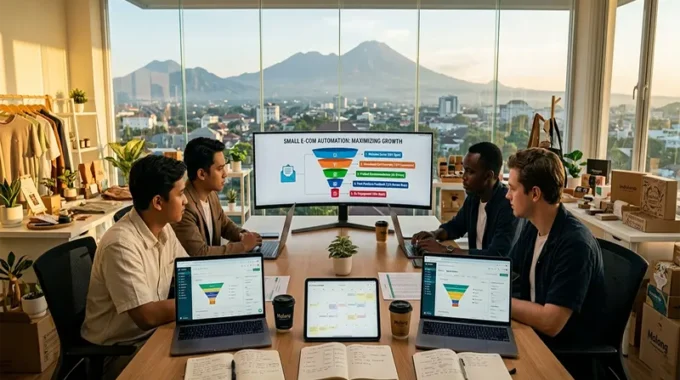
Best Email Marketing Automation Strategies for Small E-commerce Businesses

In the 2026 e-commerce landscape, the cost of customer acquisition (CAC) continues to climb, making reliance on paid ads an increasingly risky primary strategy. For the small e-commerce business, the true profit center is no longer found in finding new customers, but in maximizing the lifetime value (CLV) of those you already have.

Email marketing automation is your most efficient tool for this. Unlike social media algorithms that fluctuate, your email list is a direct line to your audience—an asset you own. When you transition from manual, “batch-and-blast” newsletters to behavior-triggered automated “Flows,” you essentially create a 24/7 sales engine that works while you sleep.

The Core Concept: Flows vs. Campaigns

To scale, you must understand the distinction between two types of email:

  • Campaigns: One-off emails sent to a list (e.g., product launches, holiday sales).
  • Flows: Automated sequences triggered by specific user behaviors (e.g., a welcome email after signing up).

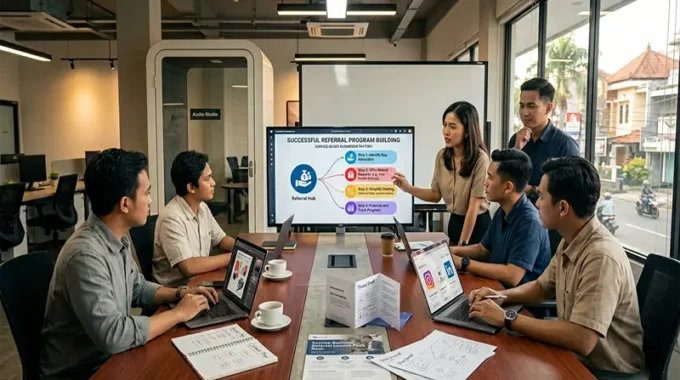
How to Build a Successful Customer Referral Program for a Service-Based Business

For most service-based businesses, word-of-mouth is the lifeblood of growth. It is the most cost-effective and highest-converting lead source available. However, many business owners treat referrals as a happy accident—something that happens “if the client feels like it.”

To scale, you must move from passive hope to an active, repeatable system. Building a formal customer referral program doesn’t just increase your pipeline; it removes the awkwardness of the “ask” and turns your most loyal clients into an extension of your sales team.

The Trust Advantage: Why Referrals Outperform Ads

Referrals are fueled by social proof. When a prospect comes to you via a referral, they arrive with a pre-existing level of trust. They have already heard that you are reliable, talented, and worth the investment. This trust advantage drastically shortens the sales cycle and improves your ability to close deals at a higher price point compared to cold leads.

The

Creative Low-Budget Marketing Ideas for Small Business Owners to Grow Organic Reach

In an era where digital advertising costs are climbing and ad fatigue is at an all-time high, small business owners often feel priced out of the competition. However, the most sustainable growth doesn’t come from “buying” attention—it comes from earning it. Organic reach is not a relic of the past; it is the foundation of long-term brand equity, turning casual followers into a loyal community that acts as an extension of your sales team.

For the budget-conscious entrepreneur, growing organic reach requires a shift in mindset: trade your marketing dollars for time, creativity, and authentic human connection.

1. Leverage User-Generated Content (UGC) as Social Proof

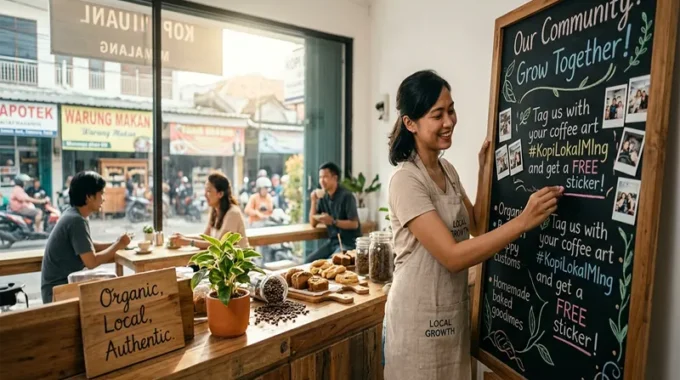
Nothing builds trust faster than a recommendation from a peer. UGC is essentially “free” marketing that acts as powerful social proof. Instead of expensive professional shoots, encourage your customers to share their experiences with your product or service.

  • Quick Win: Create a branded hashtag and

How to Optimize Your Google Maps Listing for Local Small Business Marketing in 2026

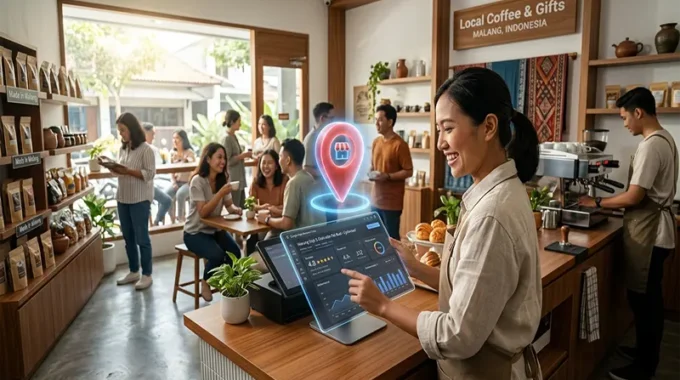
In 2026, your Google Business Profile (GBP) is no longer just a digital directory listing—it is your primary digital storefront. With the rise of AI-assisted search, Google’s algorithms prioritize businesses that provide a seamless, authoritative, and consistent experience across the entire web. Ranking in the coveted “Local Pack” (the top three map results) is the single most effective way to drive high-intent, local customers directly to your door.

This guide outlines how to transform your listing from a static placeholder into a high-performance lead generation engine.

The Foundation: NAP Consistency & Digital Syncing

Before focusing on “growth hacks,” you must master the technical basics. Google’s AI acts as a validator; if it detects conflicting information about your business, your “trust score” drops, and your rankings suffer.

  • NAP Consistency: Ensure your Name, Address, and Phone number are identical on your website, your GBP, and every external citation (e.g., Yelp, industry directories).