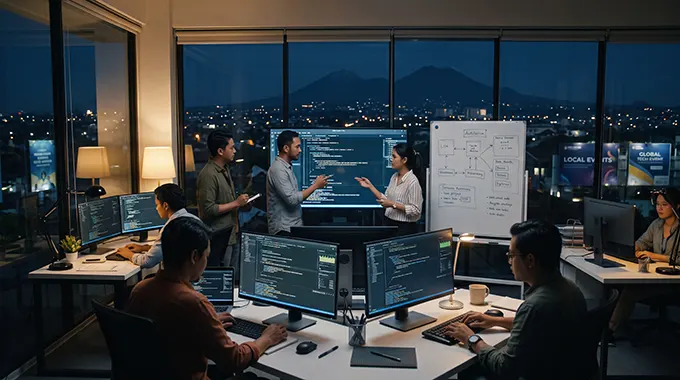
Hosting Automation with AI: The Future of cPanel

Is your team still clicking through the same cPanel screens to fix routine issues? Slow user experience, missed alerts, and manual drudgery waste time and hurt reliability. The fix is to let intelligence handle repeat work while humans focus on design and support. This article shows how automation powered by AI reshapes web hosting, and how to plan your first steps today.

Basic Understanding

cPanel is a control panel for hosting accounts. It centralises file management, email, domains, databases, and security. Automation adds scripts and policies that run tasks without a person. Artificial intelligence adds prediction, pattern detection, and guided actions. Together they create AI hosting, where the platform sets sensible defaults, watches live signals, and recommends the next move.

What AI Changes Inside cPanel

AI can read logs, metrics, and tickets to predict risk and prevent outages. It proposes safe fixes and learns from outcomes. The aim is …

How to Set Up and Configure Mining Software to Join a Pool

Cryptocurrency mining continues to be a popular way to earn digital assets, but mining individually often results in irregular payouts and high variance. To increase the consistency of rewards, many miners choose to join a mining pool. Knowing how to set up and configure mining software to join a pool is essential for successful mining. This article will guide you through the steps to get started.

What Is a Mining Pool?

A mining pool is a group of miners who combine their computing power to increase the chances of mining blocks. Rewards are then distributed among participants based on their contributed hash power. Joining a pool can improve earnings stability compared to solo mining.

Step 1: Choose the Right Mining Pool

Before configuring your software, select a mining pool that suits your cryptocurrency of choice, payout structure, fees, and reputation. Popular pools include Slush Pool, F2Pool, and Ethermine.

Consider:

  • Pool

Engineering Diversification: How Professionals Construct Resilient Portfolios Using Multi-Factor Analysis

In times where market swings are no longer the exception but the rule, the value of true portfolio diversification has never been clearer. Professional investors understand that diversification isn’t just about owning a lot of different assets—it’s about owning the right mix of assets, thoughtfully selected based on a variety of risk and return factors. This is where multi-factor analysis comes into play, offering a structured and data-driven way to build portfolios that can weather different economic regimes.

Rather than relying on outdated heuristics or gut instincts, today’s portfolio engineers use multi-factor models to identify sources of both return and risk across asset classes. From momentum and value to quality and low volatility, these factors serve as the blueprint for constructing a robust investment strategy.

The Evolution of Diversification

Traditional diversification once meant spreading capital across stocks, bonds, and perhaps a few commodities or real estate investments. This approach served …

What Are the Pros and Cons of Joining a Decentralized P2P Mining Pool?

Cryptocurrency mining has evolved significantly, and miners today are faced with numerous options to maximize their earnings and reduce risks. Among these options, decentralized P2P (peer-to-peer) mining pools have gained popularity as an alternative to traditional centralized pools. But what are the pros and cons of joining a decentralized P2P mining pool? This article explores the key advantages and disadvantages to help miners make an informed decision.

What Is a Decentralized P2P Mining Pool?

A decentralized P2P mining pool allows individual miners to collaborate directly with each other without relying on a central entity. Instead of a single pool operator managing payouts and shares, participants connect through a distributed network protocol that ensures fairness and transparency. This model aims to mitigate risks associated with centralized control, such as censorship, censorship resistance, and single points of failure.

Pros of Joining a Decentralized P2P Mining Pool

1. Enhanced Security and Trustlessness

Without …

Comparing Different Mining Pool Payout Schemes: PPS vs PPLNS

Mining Bitcoin and other cryptocurrencies as a solo miner can be challenging due to increasing network difficulty and competition. As a result, many miners join mining pools, which combine computational power to increase the chances of earning block rewards. However, not all mining pools reward their participants equally — the payout schemes differ significantly and can impact miners’ profits and income stability. Two of the most popular payout methods are PPS (Pay Per Share) and PPLNS (Pay Per Last N Shares). This article compares these payout schemes to help miners decide which is better suited for their needs.

What Is PPS (Pay Per Share)?

Pay Per Share (PPS) is a straightforward payout method where miners receive a fixed reward for each valid share they submit, regardless of whether the pool finds a block. Essentially, miners are paid a predetermined amount based on the expected value of the shares submitted.

Pros