
Cryptocurrency mining has evolved significantly, and miners today are faced with numerous options to maximize their earnings and reduce risks. Among these options, decentralized P2P (peer-to-peer) mining pools have gained popularity as an alternative to traditional centralized pools. But what are the pros and cons of joining a decentralized P2P mining pool? This article explores the key advantages and disadvantages to help miners make an informed decision.
What Is a Decentralized P2P Mining Pool?
A decentralized P2P mining pool allows individual miners to collaborate directly with each other without relying on a central entity. Instead of a single pool operator managing payouts and shares, participants connect through a distributed network protocol that ensures fairness and transparency. This model aims to mitigate risks associated with centralized control, such as censorship, censorship resistance, and single points of failure.
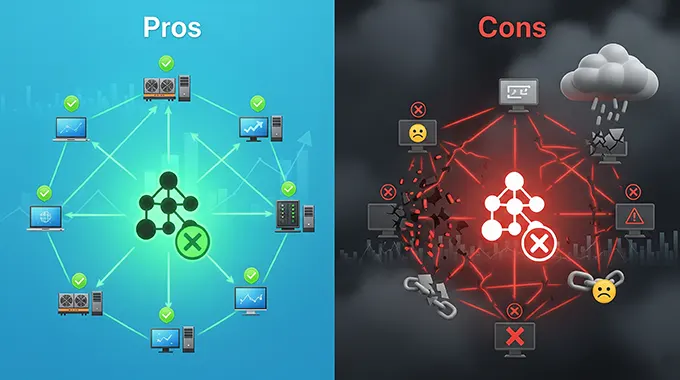
Pros of Joining a Decentralized P2P Mining Pool
1. Enhanced Security and Trustlessness
Without a pool operator controlling funds or payout distribution, miners retain control over their earnings. This reduces the risk of fraud, theft, or mismanagement that sometimes occurs with centralized pools.
2. Censorship Resistance
Decentralized P2P pools are resistant to censorship by governments or mining pool operators who might exclude certain miners based on geographic or political reasons.
3. Lower Fees
Cutting out the middleman means many decentralized pools charge lower or no fees compared to traditional mining pools, potentially increasing miners’ take-home earnings.
4. Transparency and Fairness
Since the pool operates via a distributed protocol, the process of mining share submissions and payouts is transparent, with less room for manipulation or unfair practices.
5. Fault Tolerance
Decentralized architectures reduce the risk of downtime caused by a single point of failure. If one node goes offline, the network continues to function smoothly.
Cons of Joining a Decentralized P2P Mining Pool
1. Complex Setup and Management
Setting up and participating in a decentralized P2P mining pool can be technically challenging, requiring miners to have a solid understanding of network protocols and mining software configuration.
2. Less User-Friendly
Compared to centralized pools with polished interfaces and customer support, decentralized pools may lack intuitive dashboards and formal assistance, making them less accessible to beginners.
3. Potential for Network Latency
In decentralized networks, communication with multiple peers can introduce latency, which might slightly reduce mining efficiency, especially if miners are geographically dispersed.
4. Lower Hash Rate Concentration
Decentralized pools often have lower aggregate hash power compared to large centralized pools, which might result in less frequent block rewards and more variability in payouts.
5. Limited Features
Centralized pools often provide additional features such as automatic payouts, detailed statistics, and integrated wallets. Decentralized pools may lack some of these conveniences initially.
Decentralized P2P mining pools offer a promising alternative to traditional centralized mining by enhancing security, fairness, and censorship resistance. However, they come with trade-offs such as complexity, potential latency issues, and less polished user experiences.
Miners should weigh these pros and cons based on their technical expertise, risk tolerance, and preferences. For those valuing decentralization and control, decentralized P2P mining pools could be a great fit. For others seeking ease and reliability, centralized pools may still be preferable.
Understanding what are the pros and cons of joining a decentralized P2P mining pool is essential to choosing the right mining strategy for your cryptocurrency goals.