
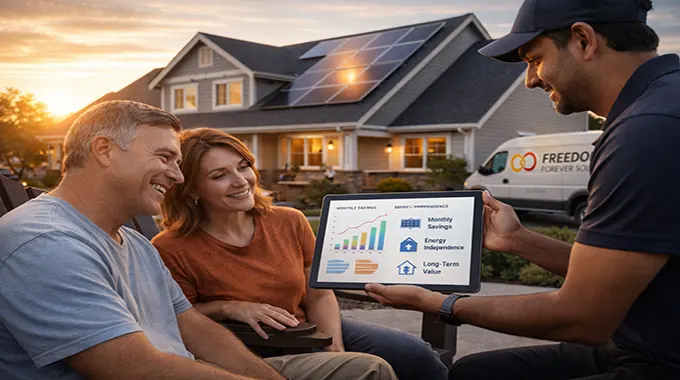
Across the country, homeowners are embracing solar energy in growing numbers. They’re installing panels, lowering monthly bills, and gaining more control over how they power their homes. Freedom Forever Solar, one of the nation’s largest residential solar providers, sees this momentum every day as families pursue cleaner, more reliable energy options.
As adoption continues to rise, the broader conversation around energy policy is evolving too. Sometimes the pace of policy updates doesn’t move in step with how quickly homeowners are making changes, creating a natural gap between how people are using energy and how programs are designed. Within that gap lies an opportunity—one that can strengthen communities, support local resilience, and make it easier for families to continue choosing sustainable energy solutions.
The growth of residential solar shows just how influential households can be. As the energy landscape continues to shift, alignment between consumer behavior and broader planning can help maximize benefits for everyone.
A Shift Driven by Homeowners, Not Headlines
The story of Solar’s growth in America isn’t just one of technology; it’s one of trust. Homeowners are adopting solar because it offers security in uncertain times. Fixed energy costs, environmental stewardship, and local control all resonate with families looking for stability.
This grassroots growth has outpaced expectations. In communities large and small, homeowners are investing their own resources in renewable systems that make neighborhoods more self-sufficient. Many families view solar energy as a practical solution rather than a statement, a way to manage household expenses while contributing to long-term sustainability. The rapid expansion across more than 30 states reflects a broader groundswell of interest, showing that Americans are ready to embrace clean energy on their own terms, even as policy continues to catch up.
When Enthusiasm Meets Infrastructure Challenges
The momentum among homeowners contrasts sharply with the complexity of energy infrastructure and regulation. Permitting requirements, interconnection rules, and inconsistent incentive programs can slow down projects that otherwise have strong community support. These obstacles aren’t rooted in a lack of interest. They stem from systems designed for different eras of energy generation. Homeowners, meanwhile, are proving that demand for renewable power already exists. The challenge lies in ensuring that legislation keeps pace with consumer behavior, making the transition easier rather than harder.
Freedom Forever Solar reviews frequently describe how switching to Solar gave homeowners control over their energy use and financial stability. Many mention the professionalism of installation crews and the clarity of communication throughout the process. These experiences highlight what’s possible when clean energy works as intended. A smooth, transparent process that delivers immediate and lasting value. The reviews also illustrate a broader truth. Homeowners are not waiting for change; they are creating it themselves.
Alignment as a Catalyst for Community Growth
When policy and consumer demand move together, communities thrive. Homeowners who install solar reduce strain on the local grid, lower peak energy demand, and contribute to cleaner air. These benefits extend to neighbors who may not have panels but still gain improved reliability and local energy stability.
Municipalities that streamline solar permitting or support residential adoption often experience additional benefits, such as new job opportunities for contractors, increased property values, and a stronger local economy. When policy reinforces the actions homeowners are already taking, it multiplies these outcomes across entire regions.
Barriers That Can Be Solved Through Coordination
The barriers between homeowner enthusiasm and policy implementation are not insurmountable. They often come down to coordination. Different jurisdictions have varying rules, documentation standards, and approval processes. These inconsistencies create friction for both installers and customers, slowing progress that could otherwise be seamless.
By simplifying procedures and promoting consistency, policymakers can help reduce delays and costs without sacrificing safety or oversight. The key is listening to the people and professionals navigating these systems every day. The homeowners, installers, and inspectors are aware of where the bottlenecks occur. The closer the collaboration, the faster and more affordable solar adoption becomes for families.
Why Homeowners Are the Best Advocates for Clean Energy
Few groups understand the real impact of clean energy better than the people who live with it. Homeowners witness firsthand how solar systems reduce their bills, provide backup power, and bring peace of mind. They also experience the administrative side of adoption, including paperwork, permitting, and financing, which gives them a balanced perspective on both the benefits and challenges.
Their experiences make them natural advocates for improvement. When policymakers engage directly with homeowners, they gain firsthand knowledge of what works and where reform could simplify access. This input helps programs serve real needs instead of theoretical goals. The nationwide network of customers represents thousands of such stories, ordinary families turning their rooftops into engines of reliability and sustainability. Their combined experience offers valuable lessons that can inform practical and effective energy policy.
Community Resilience as a Shared Goal
Each solar installation reduces dependence on centralized systems, providing a safety net during outages or emergencies. When many homes contribute to power locally, entire neighborhoods become more stable and self-reliant.
Policies that recognize and support this distributed strength benefit everyone. They help utilities balance demand, lower costs, and reduce environmental impact. Aligning homeowner experience with legislative vision creates a partnership that strengthens both community resilience and national energy security. The installations demonstrate this principle daily. Each completed system adds another building block to a stronger, more adaptive grid, proof that community-driven action can help achieve shared energy goals.
From Enthusiasm to Endurance
As homeowners continue adopting solar energy at a steady pace, the broader policy landscape is evolving alongside them. This natural difference in speed creates both challenges and opportunities. What’s clear is that clean energy has moved well beyond a niche interest—it’s become a practical, widely embraced option for many families. Thoughtful planning and responsive programs can help translate this growing interest into long-term momentum.
Bridging the gap requires collaboration, transparency, and trust. People investing in solar energy understand firsthand what makes energy systems work, and their experiences can inform smarter, more consistent policy. Companies like Freedom Forever operate within this evolving framework, connecting homeowner action with broader energy goals through dependable systems and clear communication. Each installation reflects the alignment of innovation, experience, and public purpose. When lawmakers and homeowners move in step, communities gain cleaner air, lower costs, and greater resilience. That alignment is essential to sustaining America’s clean energy future.