
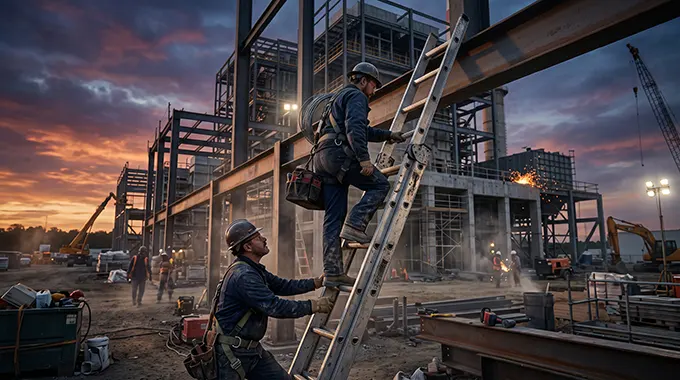
Some jobs place far more strain on access equipment than others. A ladder used occasionally around the home may only need to support light tasks, but equipment used every day on construction sites, in warehouses, workshops or maintenance environments has to cope with repeated handling, frequent movement and tougher working conditions. This is where heavy duty aluminum ladders become particularly useful, offering a combination of strength, manageable weight and long-term practicality that suits professional environments where reliability matters.
One of the biggest advantages of aluminium is that it offers considerable strength without becoming unnecessarily difficult to move. Workers may need to carry a ladder between different parts of a site several times during the day, load it onto a vehicle or reposition it in tight working areas. A heavier material can quickly become awkward, especially when the ladder is used frequently. Aluminium helps keep overall weight under control while still providing the rigid structure needed for regular professional use.
Durability is equally important. In industrial and commercial settings, ladders are rarely kept in perfect conditions. They may be stored in vans, moved through busy workshops, used outdoors or exposed to dust, damp conditions and changing temperatures. Aluminium does not rust in the same way as many untreated steel products, making it particularly practical for equipment that may spend part of its working life outdoors.
That does not mean any ladder is automatically suitable for demanding work simply because it is made from aluminium. Construction quality still matters. Strong joints, reinforced sections, secure feet and well-designed rungs all contribute to how stable and dependable a ladder feels during regular use. Professional users should also pay close attention to the ladder’s stated load capacity and intended application rather than choosing purely by height or price.
Stability becomes especially important when work is carried out repeatedly at height. A ladder that flexes excessively or shifts during use can make even straightforward jobs more difficult. Wider bases, slip-resistant feet and carefully designed rung spacing can all improve confidence while working. In busy workplaces, this can also help reduce unnecessary interruptions caused by constantly having to reposition or steady equipment.
Another benefit is versatility. Heavy-duty ladders are available in a wide range of formats, from straightforward step ladders to extension and combination designs. This allows businesses to select equipment around the tasks they actually perform rather than relying on one ladder for every situation. A maintenance engineer working indoors, for example, may have very different requirements from someone carrying out exterior repairs or working around large industrial machinery.
Storage and transport should also be considered. Because aluminium ladders are comparatively light, they can often be handled by fewer people and moved more easily between locations. For tradespeople who work from vans or travel between sites, that can make a noticeable difference over the course of a working week.
Ultimately, demanding workplaces require equipment that can withstand frequent use without becoming a burden to handle. Strength alone is not enough; practical weight, corrosion resistance, stability and suitability for the task all matter as well. When those qualities are combined in a well-constructed ladder, aluminium remains a highly practical choice for many professional and industrial environments.