
Bitcoin mining has become increasingly competitive and resource-intensive, making it challenging for small-scale miners to succeed on their own. Joining a Bitcoin mining pool is a popular strategy for smaller miners to combine their computational power and increase the chances of earning rewards. However, with numerous mining pools available, choosing the best Bitcoin mining pool for small-scale miners requires careful consideration. This article guides you through the key factors to help you make an informed decision.
1. Understand What a Bitcoin Mining Pool Is
A Bitcoin mining pool is a collective group of miners who combine their processing power to solve complex mathematical problems more efficiently. When the pool successfully mines a block, the rewards are distributed among members based on their contributed hash power. For small-scale miners, joining a pool often means more consistent payouts compared to solo mining.
2. Evaluate Pool Size and Hash Rate
- Large Pools: Tend to find blocks more frequently due to higher combined hash rates, offering more regular payouts.
- Small Pools: May offer larger payouts per block but find blocks less frequently, which can lead to irregular earnings.
Small-scale miners often benefit from joining medium-sized pools that balance frequent payouts with manageable competition.
3. Check the Fee Structure
Mining pools charge fees, typically ranging from 0% to 3% of your earnings, to maintain the infrastructure. Lower fees mean more profit, but sometimes higher fees correlate with better services or more reliable payouts. Understand the fee percentage and payment methods to ensure transparency and fairness.
4. Consider the Payout Schemes
Different pools use various payout methods, including:
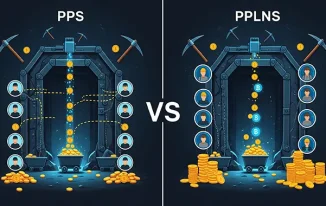
- Pay Per Share (PPS): Provides immediate, guaranteed payouts for each share contributed. Ideal for miners seeking consistent income.
- Proportional: Rewards are distributed proportionally when a block is found, which may result in variable payouts.
- Pay Per Last N Shares (PPLNS): Focuses on rewarding miners based on recent shares, often favoring loyal, long-term contributors.
For small-scale miners, PPS or similar steady payout methods might be preferable for predictable income.
5. Review Pool Reputation and Reliability
Mining pool reliability is critical. Pools with downtime or inconsistent payments can reduce your earnings. Research online reviews, community feedback, and the pool’s history to assess trustworthiness. Pools with transparent operations and active communication channels usually provide better user experiences.
6. Analyze Server Locations and Connectivity
Joining a pool with servers geographically closer to your mining rig reduces latency and improves mining efficiency. Check whether the pool offers multiple server locations worldwide and if they provide reliable, high-speed connections suitable for your setup.
7. Look for User-Friendly Interface and Support
Especially for small-scale miners new to Bitcoin mining pools, an intuitive interface and responsive customer support are valuable. Pools with easy-to-navigate dashboards, clear instructions, and active help forums can make the mining experience smoother and less stressful.
8. Assess Minimum Payout Thresholds
Some pools have high minimum payout limits, which might delay your earnings if you contribute less hash power. Choose a pool with minimum payout thresholds that match your mining capacity to receive rewards in a timely manner.
Choosing the best Bitcoin mining pool for small-scale miners involves balancing factors such as pool size, fee structure, payout methods, reputation, server locations, and user support. By thoroughly evaluating these aspects, small miners can maximize their mining efficiency, reduce risks, and enjoy more consistent rewards. Take the time to research and select a mining pool that aligns with your goals and resources, setting the foundation for successful Bitcoin mining on a smaller scale.