
Decentralized Finance (DeFi) has emerged as one of the most innovative sectors within the blockchain and cryptocurrency space. By leveraging blockchain technology, DeFi platforms offer financial services without intermediaries like banks or brokers. For entrepreneurs and developers looking to enter this space, understanding the business models for building a decentralized finance (DeFi) platform is crucial to creating sustainable and scalable ventures.
What is a DeFi Platform?
A DeFi platform provides financial services such as lending, borrowing, trading, and asset management on a blockchain network through smart contracts. The decentralized nature enables transparency, reduced costs, and global accessibility, disrupting traditional financial systems.
Common Business Models for DeFi Platforms
1. Liquidity Provision and Yield Farming
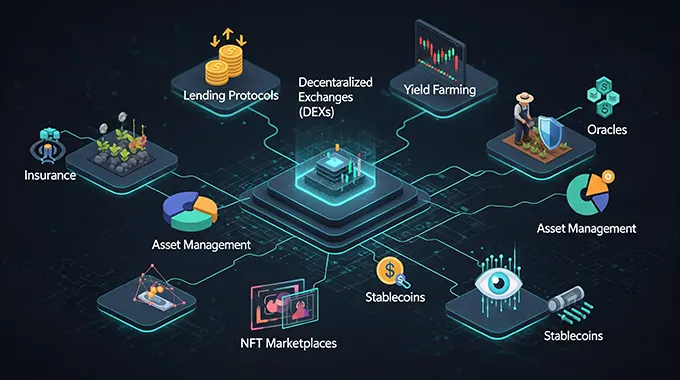
In this model, users supply cryptocurrency liquidity to decentralized exchanges (DEXs) or lending protocols. The platform incentivizes liquidity providers with rewards, typically in the form of tokens or fees. The DeFi platform generates revenue by charging transaction fees or a portion of the interest earned.
- Revenue Streams: Trading fees, interest spread, staking rewards
- Examples: Uniswap, Aave
2. Lending and Borrowing Protocols
DeFi lending platforms enable users to lend their crypto assets in exchange for interest or borrow assets by providing collateral. These platforms make money through interest rate spreads or origination fees. This model encourages active participation while generating ongoing income.
- Revenue Streams: Interest rate margins, liquidation penalties, fees
- Examples: Compound, MakerDAO
3. Decentralized Exchanges (DEXs)
DEXs facilitate peer-to-peer trading of cryptocurrencies without centralized intermediaries. The platform earns fees from each trade executed. Some DEXs also incorporate automated market makers (AMMs) which rely on liquidity pools contributed by users.
- Revenue Streams: Transaction fees, listing fees (for tokens)
- Examples: SushiSwap, PancakeSwap
4. Asset Management Platforms
These DeFi platforms offer users portfolio management tools, automated investment strategies, or yield optimization services. Revenue is usually generated through performance fees, management fees, or subscription models.
- Revenue Streams: Management fees, performance fees
- Examples: Yearn Finance, Enzyme Finance
5. Insurance Protocols
DeFi insurance offers coverage for smart contract failures, exchange hacks, or stablecoin de-pegging. These platforms collect premiums from users and compensate for verified losses. Profitability comes from premium margins and investment of pooled capital.
- Revenue Streams: Premiums, investment income
- Examples: Nexus Mutual, Cover Protocol
Key Considerations When Building a DeFi Platform
- Decentralization vs. Control: Decide the degree of decentralization to balance security, user control, and governance.
- Tokenomics: Design a sustainable token economy that aligns incentives among users, developers, and investors.
- Security: Ensure robust smart contract audits and continuous monitoring to build user trust.
- Regulatory Compliance: Navigate evolving regulations related to finance, securities, and cryptocurrencies.
- User Experience: Simplify onboarding and transactions to attract a wider audience beyond crypto experts.
Understanding the business models for building a decentralized finance (DeFi) platform is essential for creating a viable and competitive project in this rapidly evolving industry. Whether focusing on lending, exchanges, asset management, or insurance, the key to success lies in delivering value, ensuring security, and fostering community governance. By carefully selecting and innovating upon these business models, creators can capitalize on the growing demand for decentralized financial services and reshape the future of finance.